
Here we go again, another week of overnights. Another week of disturbed sleep. Read More
All posts by Rob Brown
The Death of Blackie or How my Appreciation and Connectedness for Food Continues to Grow
People say naming backyard chickens isn’t a great idea, because frequently, either the birds end up on the dinner table or nature takes it’s toll and predators or disease win out. Despite knowing this, we name the members of our flock. I was told quite directly by my children that they would never eat one of our chickens or ducks, so I decided we would raise them only for their eggs. My children had fun selecting names such as “chick-poof”, “The Jersey Girls”, and ADD “Arthur’s Dumb Duck”.
Although I agreed not to kill our chickens for meat, our benevolent intentions did not shelter our flock from nature. The first year, we lost nearly every chicken to aggressive hawks or night stalking raccoons. The hawks would soar high overhead and caw eerily. The raccoons were unseen. We eventually figured out that they were able to get into the coupe using their little hands in the darkness more adeptly than I could use my own.
Every loss left us with a sense of dread and failure. We continually made improvements to our enclosure. When we were left with one last chicken, we brought her into our home for a few weeks until we could figure out how to completely secure the coupe. We named her TLC for “the last chicken” and kept her safe and well fed.
The final coupe was located in our orchard, surrounded by 8 foot deer fencing. Chicken wire, held into place with nails, staples, bungee cords and bricks enclosed the coupe and attached run. We purchased a new flock of chicks, which TLC raised. The enclosure worked well and all of the chickens, except one, survived the summer. One “Jersey Giant”, named Blackie, had black feathers with a subtle iridescent green mixed in. Her name helped me distinguish her from “Red”, our other Jersey Giant who had a beet red crop. Blackie was a beautiful hen and laid an egg daily. Her eggs were a cream color. Blackie was a renegade and would wander off away from the flock and go scratching and digging in the dirt around the property by herself whenever given the chance.
During the wintertime, we brought the flock up close to the house to protect them from the elements. We felt tremendous satisfaction that we had finally gotten the predators under control. Our chickens had survived through the summer, fall and winter. We were feeling confident that we now knew how to protect them. Upon the transition from winter to spring though, we brought the flock back to the orchard.
In the morning after the move, I went down to the orchard and found a pile of black feathers surrounding our now headless chicken. Blackie was dead. I felt sick. It was my fault. I should have made sure she was secure in the coupe before going into the house the evening before. She must have been terrified. The other chickens were hiding in their coupe, obviously scared. I felt weak and guilty. In a way, I knew I was being a bit silly, yet I couldn’t shake my emotions.
Later in the day, I looked out the window into the backyard with my binoculars and saw a hawk pulling pieces of meat from Blackie’s dead body. When the hawk sensed I was focussing on it, it flew off. Blackie’s body was now part of the food chain. Her spirit must have passed on hours ago.
In addition to the emotional ups and downs of raising poultry, we have had many successes and failures with our fruit trees, our bees and our vegetable garden. In fact, last year, we lost our entire bee colony. Experiences like these help my family connect with their food. What we eat is not merely an abstraction. My children have felt the warmth of freshly laid eggs. We have seen our bees carrying orange bits of nectar into the hive and have tasted the honey made from these bees. We know that by pulling up and eating a carrot, we have ended that carrot’s life. If we pick lettuce from the garden before dinner, we know we are eating plants that are alive.
Not everyone has the land to grow an orchard or the interest to raise chickens or other farm animals. But if you can, try to grow a garden. At the very least, try to raise a few edible plants or herbs in containers. It’s not difficult and the rewards are vast.
Whether or not you are a carnivore or vegetarian, learn to appreciate the source of your food. For too many, food is the ingestion of a lifeless thing wrapped in plastic wrap or processed material placed in a box, catalogued with stats such as calories, fat content, ingredients, etc. If you think about the source of your food and eat it with respect, the food might taste better and may provide you with a sense of greater nourishment.
So Long, Sushi?
The schooner trip had been marked not by the excitement of seeing dolphins, but by the understanding that the ocean really has been contaminated.
Educating members of the next generation to limit their consumption of fish is a sorrowful task, but one that I, as a father of two, have felt obligated to pursue.

Why sorrowful? Because after explaining that there is toxic mercury in fish, I have had to answer questions such as “Why?” This has led to further explanations that this pollutant is the direct result of the ever increasing demand for energy by humans. Our ingenuity and technology has poisoned the ocean. For our children, it’s just one more hazard they need to grow up in and face in the everchanging environment.
My kids know that mercury is bad for the body, but they don’t really understand why. Telling them that mercury can cause disorders of the nervous system is too abstract. So, I’ve just told them that eating fish with too much mercury can damage the brain, particularly those of children and in the unborn, who’s mothers eat too much fish. They have known for many years that the ocean’s fish are laden with mercury. For others though, the presence of mercury in fish is unacceptable. This became clear to us on an annual beach vacation.
We had just finished dinner at a beach front seafood restaurant and were waiting to take a sunset cruise amidst the dolphins off the Maryland coast. A local fisherman sat on the dock bench next to his wheel barrow, decapitating his catch. My children both stared in horror as the head of the beautiful fish dropped into the white 5 gallon bucket. The whitish pink flesh was exposed in the fisherman’s arms. Keeping my distance, I sensed my children’s excitement at their perceived independence. That’s when the #$%$ hit the fan.
“Ewww!!! I can see the mercury!”
My 8 year old son stared at the 3 foot long fish, feeling completely comfortable with his proclamation.
The fisherman shouted, “There’s no mercury in this fish!!”
My son just stared at him, frightened and confused.
The fisherman’s rant continued, “That’s the problem with this country, you environmentalists. You teach your children… blah, blah, blah.” The rest of his words faded into nothingness.
I walked over and carefully extricated my children from the hostile encounter.
At the de-briefing, I clarified that they were correct in knowing that there was mercury in that fish. But, they weren’t able to see it. People my age grew up with mercury thermometers and barometers. As my children have never actually seen mercury, perhaps my son thought the glistening cartilage within the fish’s frame was the toxic element. Who knows.
Mercury content is the main reason why we only eat a few, certain types of fish. We strive to eat varieties reported to have the lower mercury concentrations, such as salmon, tilapia, cod, and seafood. Although in the distant past, we used to enjoy family meals of sushi on Friday nights, my children are now limited to one 4 oz serving of fish a week.
Although the EPA set up guidelines to provide suggested maximum fish intake per week many years ago, it seems that most people still know nothing about these limits. Fish varieties that may contain the highest levels of mercury, among them swordfish and ahi tuna, are still sold in exclusive restaurants and expensive markets. Let’s be real. It’s not not like you are going to get a swordfish with less mercury if you pay more money for it.
The www.nrdc.org website has an excellent list of fish types and rates each variety by level of mercury concentration. Check it out before your next fish meal.
How I Met My God on Mt. Kilimanjaro
It was daybreak and the sun came to view on the distant horizon. Hours earlier, we had formed a train of head lamps which snaked up the mountain, surrounded, literally, by stars. It was very cold.
Pole, pole, pole our guides chanted.
Step. Breathe. Step. Breathe.
Two steps forward, one step back. Two steps forward, one… two steps back. Breathe… breathe…

Jim knelt down and put his head between his knees gasping for breath. I felt badly for him, but I was nervous that we were taking too long. Anne sat and quietly announced she couldn’t continue. Timing was important and we had a ways to go before reaching the summit.
It was then that our head guide made an executive decision and asked the accessory guide, Ndesario, to bring me up the rest of the way while he stayed with the two others. I breathed a sigh of relief. A lot of training had gone into this trek and I wanted to reach the peak.
As we ascended, I felt weaker and sicker. At around 18,500 feet I asked myself, “Why the heck am I doing this?”
My fantasy of climbing the 7 peaks faded away as I wondered if I could even make just one. Then, the summit came into view and I relaxed.
It was a gradual walk from there to the peak. When I finally got there, I snatched a quick photo of the sign that would later be the only proof of my success. I then motioned to Ndesario that it was time to head down.
It was about two hours down the scree that I sipped my last bit of water. Exhausted, but otherwise feeling better after descending a few thousand feet, I casually asked Ndesario “How much farther till we get to the camp?”
“Half an hour” he said joyfully.
I’ll be fine”, I thought. The scree was like sand. Step, slide, Step, slide. It was challenging. My thighs burned intensely with each slide. But, I could survive anything for a half hour. The air was warm and indeed, it was a beautiful day.
That half hour came and went. There was no sign of the camp and I hadn’t seen another person since leaving the peak.
Now nervous, I muttered to myself, “Does he know where he’s going?”
While trudging on, I asked more emphatically, “Ndesario, How much further till the camp?”
“Half an hour” he said.
This time with a little less joy.
Filled with panic, I screamed, “You said that a half hour ago! Do you know where we are??? I’M OUT OF WATER!! I NEED WATER!!”
I showed him my empty water bottle and shook it with rage. I was angry with him. I knew we were lost. I blamed Jim and Anne for taking so much time on the ascent. Perhaps most of all, I was angry at myself for not bringing enough water.
Ndesario responded with a string of 3 or 4 “Half an hours.”
At this point, realizing that my guide didn’t speak English, I took off my long underwear as I was becoming dehydrated. Sweating was the last thing I wanted to do. I covered myself with my shell for protection from what was now the scorching desert sun. I threw my underclothes at my African guide, who wore a long sleeved shirt and long pants. Not a drip of sweat on him.
We continued on. As I stumbled forward, I felt my lips crack. Initially, I could taste blood as I licked them, but soon, the blood crusted over and became rough. My tongue then dried and became glued to the floor of my mouth. I looked at my guide, Ndesario, now with fear and respect. He moved steadily without any need for water. I realized then that he hadn’t carried a water bottle on this entire overnight journey.
In my delirium, I began to accept that I might die on Mt. Kilimanjaro. I had no tears. My anger and panic were gone. My mind drifted off and although I kept prodding forward, I lost all sense of time and purpose.
That’s when the extraordinary occurred. I heard a subtle noise from somewhere ahead. Then, a very dark skinned man bounced up the rocks wearing what I remember to be a Rastafarian colored hat. He was filled with life’s energy and importantly, he was carrying a flask.
“Water” I pleaded, with my dried up mouth.I’ll never forget the look he gave me. My life was in this stranger’s hands.
He handed me the flask hesitantly and delicious water flowed into my mouth. It was curiously cold considering we had been in sweltering heat for hours. My savior took his flask back and vanished over the rocks. I regained some stamina to keep going.
We walked for what seemed to be at least another 2 hours, when we finally reached the camp. There, I was quickly placed on a cot and given fluids.
As I lay there dreaming, I wondered who that guy was who mysteriously showed up at the precise moment I believed myself to be at death’s door? Was he an angel? Had my God appeared. Was he a messenger or runner that I had manifested? To this day, 21 years later, I wonder why this guy was alone, wandering over 16,000 feet. I also wonder if he knows he saved a life that day.
Miracles, that is unexplainable “coincidences” for the scientifically inclined, occur all the time, usually when least expected. It is usually only after the occurrence happens that one becomes aware of the miraculous. Whether you have a chance meeting with an old friend in some obscure place, happen to be given just enough money for an expense you couldn’t afford, or stumble upon a choice parking space on a busy street in front of the restaurant you have reservations at, these seemingly impossible events occur. I think of them as divine manifestations.
Being conscious means being aware. Accept those things seen and those unseen. Don’t write divine gifts off as mere coincidence or chance. Pay attention. Call it what you will, your intuition, your guiding spirit, your angel, your God, or something else. The more you acknowledge to these special moments, the more you will see into this nebulous realm and the more miraculous your life will become. Indeed, it may save your life one day.
A Powerful Friend with Resonance
The ability to hear and discriminate between different sounds is a gift. Our world is infiltrated with tone which we have learned to manipulate to create music. Aside from melody recognition and lyric interpretation, I have recently become appreciative of the subtle impacts that notes and music can have on one’s wellbeing. During two recent, but dissimilar experiences with sound, I have become aware that notes and music transmit more than just a melody.
My first experience occurred in Sedona, AZ. I had been curious about the technique of sound healing and good friends recommended I contact a practitioner from Brazil. As I walked into his studio, I noticed beautiful glass and metallic bowls scattered around the room, in addition to gongs, and other mysterious instruments. Porangui, the healer, instructed me to lay down on the table and covered my eyes with a soft cloth. As I lay there, I began to hear rich, complex, overlapping tones with varying intensity that made my body vibrate.
At first, I intellectualized the experience, reasoning that I was hearing Porangui play the various instruments. I knew that I needed to surrender to the experience though, and relax if I was going to benefit from the treatment. I focussed on my breath to bring about a meditative state and as I fell deeper and deeper into relaxation, I suddenly felt detached from my physical body. My consciousness wasn’t floating above the table or in the corner of the room, as some have reported with an out of body experience. Instead, I existed only as a stationary ball of light in the void of space. At varying distances from my orb presence, I sensed additional sources of light, which provided me with a sense of my relative position in space. These sources of illumination must have represented the sound energy originated from each of the singing bowls as they were played. It was a profound experience, induced by tonal sound.
Jennifer’s vocal performance at Eastman school of music was equally momentous. The operatic pieces she selected were unfamiliar to me. I imagined that most people in the audience had no comprehension of the words as each piece was sung in a different language. Yet, my niece captivated the audience with her gorgeous soprano voice during the weekend of her senior recital. As we listened, we were filled with awe, even reverence, that brought unexpected tears to our eyes. Even the legendary singer/songwriter Carole King, in town raising support for Hillary Clinton, dabbed her eyes with tissues as she listened to Jennifer’s performance. It was a truly uplifting experience, after which we were all filled with intense joy.
The notes that create music including those produced by a singing bowl, an acoustic instrument or a human voice, can create resonance, a phenomenon in which sound imparts energy into materials that are “tuned” to the same frequency. The classic example of an opera singer forcefully singing a singular note and imparting so much energy into a wine glass that it will shatter, is a real phenomenon. Most every physical object has a frequency at which it will resonate. In addition, individual parts of a whole can each have their own unique resonant frequencies. As all living beings have the ability to resonate, absorbing energy through resonance may explain why even plants grow better when they are sung to or played music.
Live acoustic music and analogue recordings provide a continuous, complex mixture of dominant notes and overtones called harmonics, each of which can also cause resonance. The mixture of a note with its complex of harmonics gives the tone a richness, called timbre. Digitized music by its nature, provides fewer harmonics and less timbre.
Listening to music can help calibrate or “tune” our bodies. To experience this sensation, sit outside and listen to the birds chirping and singing. Then, focus your sense of hearing by turning off your vision by either closing your eyes, or better yet, placing a blindfold on. Relax and you will instantly become aware of where you are in space, in relation to the sounds you are hearing. It may be disorienting or even frightening at first for you will feel vulnerable. You may be tempted to open your eyes or remove your blindfold, but sit with your eyes closed for 5 or 10 minutes and just relax, listening. After a short while, you will grounded and positioned by the sounds you hear.
Listening to or playing music each day,especially acoustic or analogue music can improve your health. Whether you sing in the shower or in the car while listening to the radio, producing music with your voice will benefit you, by imparting you with energy and reducing stress.
Music has always been emphasized in our family. I love to hear the sounds of my children practicing the piano and the violin each day. We even have two “singing bowls”, which someone will occasionally strike. If I am feeling uneasy or stressed, playing the singing bowl and filling up the room with its rich vibrational tone instantly brings me a sense of peace and serenity.
It can be wonderful to have an acoustic instrument at home. Having your children listen to or learn to play music, particularly classical music, is wonderful for brain development. Have you heard of the Mozart effect?
Sound is the only sense that we can consciously produce as well as absorb. So, enjoy it by bringing music into your home and playing or listening daily.
Yeah, I Love Heavy Metal – Just not in my Tomato Sauce
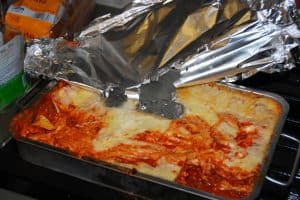
My journey to an aluminum foil alternative began inconspicuously enough: When I first opened this particular package of aluminum foil, it seemed fine. Perhaps it was because the lighting was bright or I just wasn’t paying attention. But when I went to wrap the dinner leftovers later that evening, I noticed a peculiar rainbow type pattern on one side of the foil. It was a smear that ran lengthwise on the roll. I thought that maybe it was too old or had somehow mildewed from being in the basement too long, which has a tendency to be damp. I unravelled the roll a few feet to try and find foil that looked more normal, but had no luck. Hurried, I chose to make sure that the weird looking side of the foil was facing away from the food, so it didn’t contaminate the food with whatever this stuff was. Somewhere, I had heard that there was one side of the aluminum foil you didn’t want to have contact your food anyway. This became my modus operandi for the next few weeks. But, each time I handled the foil, I was irked by the blemish. Finally, I threw the box into the recycling garbage. I was pleased with myself for being willing to toss it out, for I’m usually one who doesn’t like to “waste” things.

As if I had been living a bad dream, when I opened the food wrap drawer to make school lunches the following night, that roll of tarnished aluminum foil was back in the drawer! Someone must have salvaged the foil out of the garbage. Ugh. Now, I had to throw the foil out a second time. Not wanting to make a habit of this, I buried the foil deep in the garbage so no one would dare go and get it out. Then, I turned the computer on and began researching aluminum foil. It turns out, after almost 70 years after this invention, it’s not a product you want to have routinely touch your food.
Foil is fine for a wrapping most cold dishes, as long as the food isn’t acidic. Wrapping a sandwich is fine. When aluminum is wrapped on food and heated, the foil releases tiny aluminum particles into the food it is protecting from drying out. Leaching also happens at room temperature when the foil is resting comfortably on an acidic food, such as tomato sauce. How many times have I not only wrapped my leftover spaghetti and sauce with aluminum foil, but then placed the dish along with the foil in the oven to reheat the meal?!
Aluminum is a heavy metal that is toxic to your nervous system. You don’t want to eat it. There is an association between aluminum and neurodegenerative diseases such as Alzheimer’s disease and Parkinson’s disease.
What to do?
Consider a useful aluminum foil alternative: unbleached parchment paper. I prefer the “If You Care” brand that uses silicone for a nonstick coating instead of other chemicals. It’s cheap, clean and it will provide an appropriate barrier between your food and your aluminum foil. Put your food in a Pyrex dish, CorningWare or a ceramic dish and first cover your food with parchment paper, and then wrap with foil. You can reheat your food in the oven with the parchment paper under the foil. It’s a simple solution to reduce your exposure to a common household toxic heavy metal.
See also: Avoiding household toxicity with The Radon Test Ruse.
Eat to Nourish, Not to Kill
It was 1983. Halfway down Mt. Katahdin, I noticed my buddy was in terrible shape. We still had boulders to descend and it was beginning to rain. Dave kept his humor, but I knew his stomach was cramping. It wasn’t pretty. Upon our arrival home, Dave was misdiagnosed as having ulcerative colitis. His punishment: long term antibiotic therapy with sulfa drugs.

Before our trip, Dave had taken ampicillin for a “cold”, which wreaked havoc on his digestive system. At that time, doctors knew little about beneficial intestinal bacteria or that antibiotics could damage this “microbiome.” These bacteria support proper digestion and provide essential nutrients, including Vitamin K, Vitamin B12 and Vitamin B7, strengthening the immune system.
If antibiotics selectively kill a segment of the microbiome, the intestine can then become overpopulated with potentially harmful bacteria. One particular strain, C. diff, can cause a severe form of colitis, accompanied by stomach pain and diarrhea. After more antibiotics, a healthy microbiome then needs to be restored.
Antibiotic residues are prevalent in the food supply. Frequently eating antibiotic laced food is not a good idea. Beef cattle are fed antibiotics to help them gain weight. Dairy cattle are treated to prevent mastitis, an infection caused by hormonal overstimulation to produce milk. Chickens and farm raised fish too are fed antibiotics to keep them healthy in their overcrowded homes.
Vegetarians aren’t spared. Glyphosate, a common herbicide used by farmers, has antibacterial properties. Genetically modified organisms (GMO) designed to grow in treated soil absorb the chemical, Eating GMO crops, such as corn or soybeans ,will provide a low dose, frequent exposure to antibiotics. Wheat may also contain traces of glyphosate as it is now common to spray wheat fields a few days before harvest to kill the plants, making for an easier harvest.
So what can you do?
Reduce your intake of food laced with antibiotics. Eat organic meat, grass-fed beef and organic chicken. Choose packaged meats with labels that read “animals raised without the use of antibiotics”. Eat wild caught fish.
Choose organic vegetables, fruits, and processed foods. Feed your children organic milk products or those labeled “no antibiotics added”. Purify your drinking water with a high quality filter as even bottled water may contain traces of antibiotics.
Yogurt, Kefir, sauerkraut and supplementation will help create and maintain a healthy microbiome. If bacteria are happy in your gut, they will grow and reproduce. But, if you ingest antibiotics while taking probiotic supplements, what’s the point?
An unhealthy microbiome can impair digestion. Some believe gluten sensitivity is caused by a damaged intestinal microbiome. Let’s face it, people have been eating bread products for thousands of years. Why are so many now unable to digest gluten? If you have been diagnosed with a malabsorption syndrome such as gluten sensitivity or celiac disease, try to build your microbiome. After a few months, see if your symptoms improve. Take care of your microbiome, improve your health and immunity. It’s worth it!
Photo of Mount Katahdin by Tyler Farmer
No More Crispy Home Fries
Was it an act of defiance? Once again, I requested extra crispy home fries. This time though, I was secretly mired in conflict. I love my potatoes burnt to a crisp. But, after reading a recent scientific paper about the cancer causing effects of fried potatoes, I’m gearing up for yet another change in my diet.

To quickly summarize, the hazards of adding nitrates to food dates back to a Norwegian Mink farm in the 1950s, when animals began to suddenly die from liver disease and cancer after being fed a new diet of fish meal preserved with nitrites. It was soon discovered that the nitrites were being converted in the animal’s stomach to nitrosamines, sickening and killing the animals.
Both nitrates and nitrites are naturally present in many grains, fruits, and vegetables including celery, leafy greens and potatoes. Nitrates are converted to nitrites in the body. Nitrites are then chemically converted into either beneficial or harmful compounds. When nitrates are ingested in vegetables alone, they are usually turned into healthy nitric oxide which can have beneficial cardiovascular effects. But, when nitrates are combined with degrading proteins in the presence of high heat (cooking) or a strong acid (digestion), they form nitrosamines.
Nitrosamines are carcinogenic, associated with cancers of the esophagus, stomach, colon and rectum. Nitrosamines have also been associated with Alzheimer’s disease, Parkinson’s disease and type II diabetes. This is bad stuff.
Because nitrites/nitrates prevent bacterial growth, have a mild salty flavor and redden meat, food producers apply synthetic and natural occurring nitrates to chemically preserve meats and other foods. Your skillet, grill or broiler can become a perfect crucible for the production of nitrosamines when you cook hotdogs, bacon or sausage. To address this problem, manufacturers have significantly decreased the amount of nitrates they use and they add Vitamin C to processed meats, which inhibits nitrosamine formation.
Gratefully, the incidence of colon carcinoma is going down in this country. This is in part related to screening exams, but also likely due to the decreased concentration of nitrates added to processed meats. As of October 2015 though, colorectal carcinoma was still the 3rd most common form of cancer death in the US, so perhaps more changes are needed.
According to recent research by Qajarbeygi et al, it turns out that deep frying or pan frying potatoes produces nitrosamines too. Although the researchers didn’t test foil wrapped potatoes cooked on hot charcoals, I think this too would cause nitrosamine production.
It was previously believed that the potato skin contained all the nitrates so if you peeled the potato, you would remove them. But the potatoes were peeled in this study. Potatoes contain vitamin C, but apparently not enough to prevent nitrosamine formation.
What can you do?
1. Reduce your intake of processed meats and look for labels that specify no nitrates added. Even then, check the ingredient panel for celery juice or celery salt. Celery is a source of nitrates and the chemical effect is the same.
2. Reduce consumption of other foods containing nitrosamines, including beer, artificial cheese, smoked and salted fish.
3. Boil or bake your potatoes and sadly say goodbye to crispy home fries.
What You Eat… Becomes You
While online at a local coffee shop this morning, I overheard a father say to his two children, “It’s important to have real food with real nutrients everyday.“ I’m not sure if they understood the concept of what a nutrient is, but it was heartwarming to hear. This dad is right and his kids are growing up learning to be conscious about the food they eat. There is a lot of “food” out there that isn’t nutritious, and some that isn’t technically food.

At a time in our country when gourmet home cooking has become a popular national past time, the food supply itself has become tainted with many hazards. There are many cooking shows on television, recipes galore on Pinterest and 40 different types of cheese in your average supermarket to facilitate making home cooked meals that are complex and beautiful. Many people are developing a sophisticated palate with an impressive ability to critically assess a food’s presentation. The paradox though is that this assessment is based on the sensual experience of food, meaning the food’s look, aroma and appearance rather than on its nutritional value or potential toxicity. The quality of the food is the big unknown and despite the increasing number and variety of recipes, people all around the country are getting sicker and sicker.
In general, people choose to eat foods that look and taste good. Knowing this tendency, the food industry has figured out ways to increase their product’s shelf life, as well as make their products look more appealing and taste more flavorful. Unfortunately, with few exceptions, each processing step has potential side effects of which most people are unaware. The processed food market is replete with chemicals that are designed to stimulate people’s taste buds. Do you think the creation of the sweet and salty blend in the flavor “salted caramel” is by accident? Whereas it used to be that only packaged foods were processed, now, most conventional fruits and vegetables have also been processed in some way. For example, are you aware that most conventional root vegetables such as potatoes are dipped or sprayed with chemicals that prevent them from sprouting so they will have a longer shelf life?
What nutrients do we need from food?
There are several important categories of nutrition we need from food, primarily sugars, fats and proteins. Chemical energy comes to the body from the enzymatic breakdown of starches and sugars. Each cell has the ability to digest sugar which the cell can then use to function. If you eat too much sugar, however, your cells will convert the excess sugar into storage molecules, including fat, for later use. If you aren’t physically active, and you continually eat too much sugar, you are setting yourself up for diseases such as obesity and diabetes.
Fats are a critical source of nutrition for the body. In fact, every cell in your body is surrounded by a membrane composed of molecules which contain fatty acids that are acquired through the digestion of fats. Although cholesterol has gotten a bad wrap for its association with plaques in the cardiovascular system, cholesterol is also a necessary constituent of every cell membrane in the body. Cholesterol helps give every cell membrane structure and allows the membrane to function properly. Cholesterol is also a building block from which your body is able to create many hormones which are crucial for communication between different organ systems and glands in the body.
Proteins too are an essential part of one’s diet. Through the digestion of protein, the body is supplied with amino acids which then travel through the bloodstream supplying the body’s cells with the building blocks needed to create their own proteins.
So during your next meal, give some thought as to what you are consuming. If you are eating a packaged, processed food, look at the ingredient panel, and take note as to whether or not you are ingesting proteins, fats and sugars, or, are you eating a chemical compound that is something else?
A Breath of Fresh Air
As I sat on the gurney, with my nose packed with petroleum jelly gauze, VOCs in paint were far from the top of my list of immediate concerns.


