Research
Are Cell Phones Dangerous?
This question is at the heart of Rob's research — including a new study investigating the links between wireless radiation from cell phones and changes in red blood cells, known as Rouleaux formation.
In this presentation, Rob joins Dr. Devra Davis, co-founder of Environmental Health Trust, to discuss his study, published in Frontiers in Cardiovascular Medicine.
FROM: Frontiers in Cardiovascular Medicine
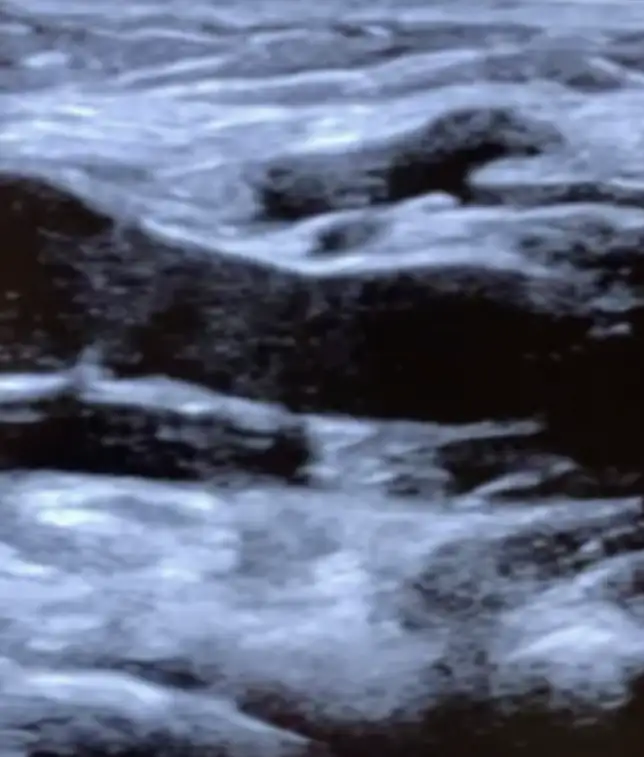
Hypothesis: ultrasonography can document dynamic in vivo rouleaux formation due to mobile phone exposure
CONTEXT: On THE Search for the Smoking Gun
A few years ago I found myself at a graduation party, in an unlikely position: trying to convince a fellow partygoer of the dangers of wireless radiation. In my naivety, I thought he might be interested in what I had learned concerning the scary health effects of cellphones and wireless technology. In retrospect, a graduation party probably wasn’t the best place to discuss such a heavy topic, but I felt compelled to act.
I delivered about half of my impassioned speech and was then cut off. “I read about this years ago and it has all been debunked,” he said. They’ve never been able to prove a mechanism. The only effect wireless technology has on living tissue is heat production.”
“That’s not true!” I said. “There are literally thousands of scientific papers in peer reviewed literature showing damaging biological effects from nonionizing radiation not caused by heat. The mechanism is oxidative stress.” I was becoming rattled.
His eyes glazed over as I uttered the words “oxidative stress.” With a snarky tone, he said, “All these publications and yet they still haven’t come up with a smoking gun!”
I tried to hide my exasperation and politely ended the conversation.
The adversity from that day got me thinking long and hard: What would it take to convince skeptics that we are all facing health dangers from constant exposure to wireless communication radiation?
After that encounter, I embarked on a search for that elusive smoking gun. There are hundreds of amazing research studies published in the peer reviewed literature that show cell damage, DNA damage, and cell dysfunction, but they are all abstract. The science deals with invisible concepts and calculations. And, unless you are one who is familiar with looking at blots and/or cells under a microscope, these findings are unrelatable.
The most compelling studies for the lay audience have been those showing blood effects. During the COVID pandemic, I wrote about how an an effect called rouleaux formation — in which red blood cells stick to each other in stacks, creating long chains, after they have been exposed to a cellphone or wifi router. At that time, this diagnosis was made by a technique called dark field microscopy. Although I was convinced by the pictures I saw, the scientific community at large was not. The skeptics believed the photos were the result of artifacts caused by improper technique. This potential health sequela was therefore discounted.
One night, it occurred to me that I have on rare occasion seen rouleaux formation when reading vascular ultrasound studies. The appearance is characteristic; nothing else causes the appearance. I decided to work with an ultrasound technologist to do a study and see if cellphone radiation does indeed have the ability to create rouleaux formation. The results and accompanying supplementary videos are published in our paper:
I invite you to read the paper and share it with your friends, family, and colleagues. This paper is the smoking gun. It visually displays an effect occurring inside our bodies from wireless devices that have nothing to do with heat. It’s an effect that can have significant health consequences. More studies will be done in the future to further our understanding of this phenomenon and determine how common this is. Now, I am hopeful.
ROULEAUX FORMATION: REad more
- Environment: Science and Policy for Sustainable Development: Hypotheses and Images: Cellphone Radiation and Clumping Blood
- EMR Australia: New study shows mobile phone radiation affects blood
- The Defender: Cellphone Radiation Causes Abnormal Blood Clumping in Just 5 Minutes, Study Finds
- Strålskyddsstiftelsen: Mobilstrålning får blodceller att klumpa ihop sig – kan ge huvudvärk, stroke
- MDSpire News: Smartphone Exposure Linked to Rouleaux Formation
- Le Vaud sans antennes ch: Ultrasound Study Reveals Wireless Radiation Can Cause Blood Cells to Stick Together
- EM – Radiation: New Study Commissioned by Environmental Health Trust (EHT) Cellphones and Your Blood: What You Need to Know
- MedIndia: New Study: Cell Phones May Cause Sluggish Blood Flow After Just Five Minutes of Exposure
- The Highwire: New Study: Cell Phone Radiation Can Cause Blood Cells to Clump Together